
Reading container loading figures: how to calculate landed cost for free weights
Free weights are heavy and cheap per kilogram, so freight decides the margin. How to use net weight, gross weight and container loading quantities to price a dumbbell or plate order before you commit.
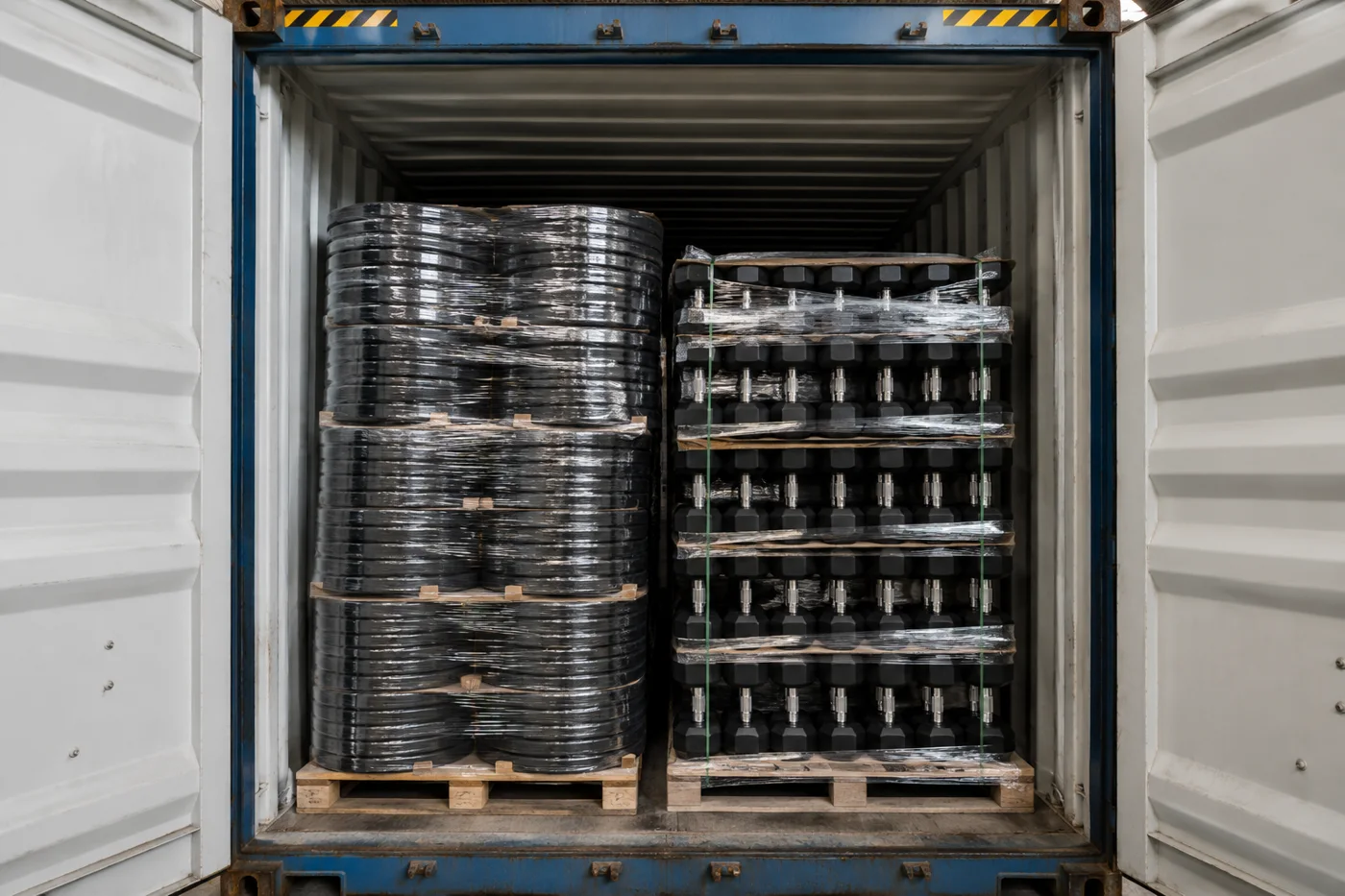
Free weights are unusual cargo. A 20ft container of dumbbells reaches its weight limit long before it is physically full, which means freight per unit is decided by mass, not by carton count. Buyers who price on FOB alone routinely find that a cheaper factory quote becomes the more expensive landed product. This is how to read the loading figures we publish and turn them into a landed cost.
The four numbers you need
- Net weight per unit: the product itself.
- Gross weight per carton: product plus packaging and pallet share.
- Carton dimensions: to check whether volume or weight is the constraint.
- Loading quantity for 20ft, 40ft and 40ft high cube: how many units fit before the container hits its payload limit.
Weight-limited, not volume-limited
We plan every load against two ceilings and take whichever is reached first: usable packed volume of roughly 28 m³ in a 20ft, 56 m³ in a 40ft and 68 m³ in a 40ft high cube, and gross payload of about 21.5 tonnes in a 20ft and 26 tonnes in either 40ft box. Free weights almost always hit the payload ceiling first. That is why a 40ft high cube carries no more weight than a standard 40ft, even though it holds another 12 m³ of air. For dumbbells and plates, the 20ft box is usually the efficient one: you pay for one container and fill its payload. A 40ft box loaded with plates only wastes cubic metres. The exception is mixed cargo: bars, kettlebells and sewn goods are light for their volume, so a 40ft high cube with plates on the floor and mats, bags and boxes on top uses both the weight and the space.
Working the example
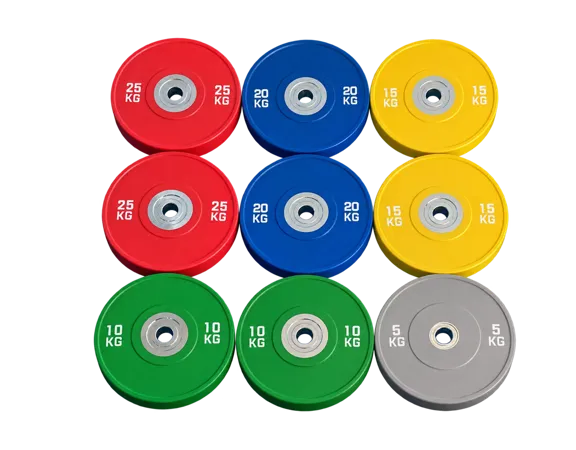
Take a rubber grip plate set. If the loading table says 2,400 units of 20 kg plates per 20ft container and the ocean freight to your port is a known figure, freight per plate is simply freight divided by 2,400. Add FOB price, insurance, destination handling, duty at your tariff code and inland delivery, and you have landed cost per plate. Do the same for 10 kg plates and you will see freight per plate roughly halve, which is why a mixed weight order often lands cheaper per kilogram than buyers expect.
Why we publish the table
Most suppliers only give loading figures after a quotation, and some not at all. We supply them with every quotation so that the comparison a buyer makes is on landed cost. If you need a figure for a product not listed, ask: it is data entry on our side, not a commercial secret.
Checklist before you confirm a container
- Confirm the road weight limit at the destination; some countries cap containers below the ship's payload.
- Decide whether to fill remaining volume with light items (bars, collars, mats) to lower the average freight per unit.
- Check pallet versus floor-loaded: pallets cost payload but speed unloading.
- Ask for the packing list in advance so customs classification is done before arrival.

Written by the people who quote, tool and inspect the product at our own plant. Questions: [email protected]
Request a quotation
Send the list. Get price, lead time and container loading in one working day.
Item list, quantities and destination port are enough to start. Logo artwork and colour references can follow once the price is agreed.
- Email[email protected]
- Phone / WhatsApp / WeChat+86 138 6042 3022
- OfficeIronhue Limited
Room 1203, No.5 Jinzhong Road, Huli District, Xiamen, China