
Quick answer
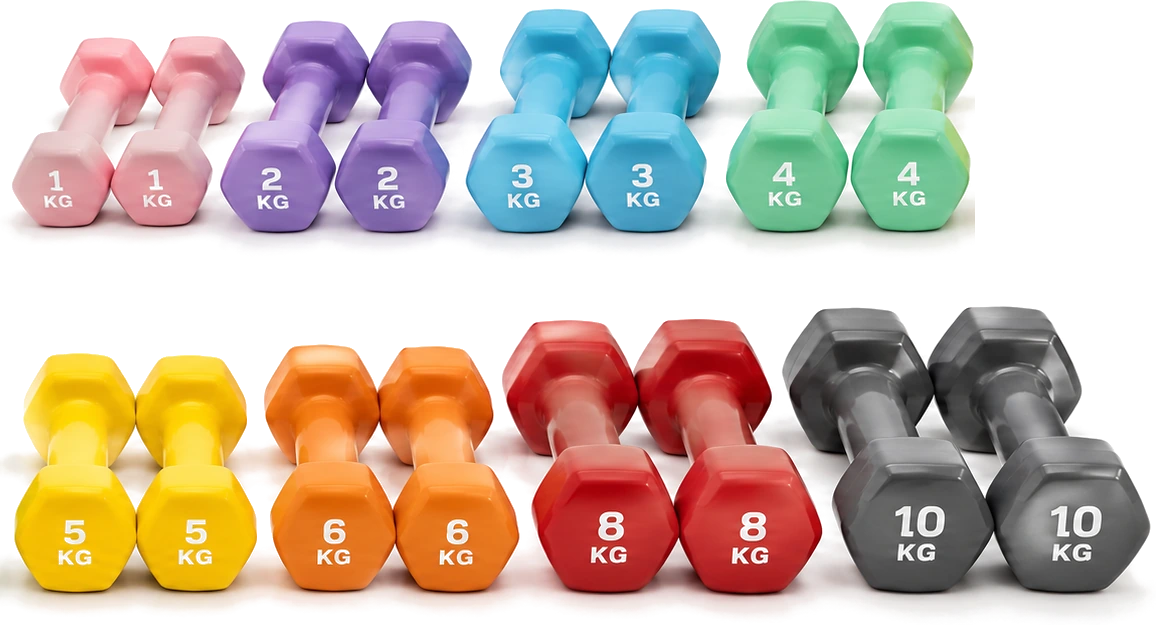
Colour on coated free weights is pigment mixed into the material before forming, not applied to the surface, which means it must be correct before the batch runs. A screen cannot define it: monitors differ, and a coated surface reflects light differently from an emissive display. The workable process is a Pantone reference, a physical swatch produced in the actual material, and written approval of that swatch. Some batch-to-batch variation is inherent; the tolerance should be agreed in advance rather than argued afterwards.
A brand owner sends a screenshot of their logo and says the blue should match. Three months later a container arrives and the blue is not what they pictured. Neither party did anything unreasonable; the specification was never actually defined.
How colour gets into the product
On coated free weights, colour is not painted on. Pigment is mixed into the material before forming, so it runs through the whole section — which is why a scuff on a urethane dumbbell reveals more of the same colour rather than a different substrate.
It also means colour cannot be adjusted afterwards. Once a batch is mixed and cured, it is what it is.
Why a screen cannot specify colour
- Monitors differ. The same file looks different on two screens, and neither is authoritative.
- Emissive versus reflective. A screen emits light; a coated dumbbell reflects it. A colour that looks right glowing on a display can look quite different in a gym under fluorescent lighting.
- Material affects appearance. The same pigment in urethane, TPU and vinyl produces three different-looking results, because the base materials have different translucency and surface finish.
Hence the rule our technical manager applies: what you see on a screen does not count.
The process that works
- Pantone reference. Not “navy” or a screenshot — a specific code, ideally from a physical Pantone book rather than a digital library.
- Physical swatch in the actual material. We mix and produce a sample in the material the order will use.
- Written approval of the swatch. The approved physical sample becomes the reference, not the Pantone code.
- Retained sample. Both sides keep one. Any later discussion refers to it.
The third step is the one most often skipped, and it is the one that prevents disputes. A Pantone code is a target; the approved swatch is the specification.
Batch variation
Some variation between batches is inherent. Raw material lots differ slightly, and cure conditions are not identical every day.
It is controlled by mixing to a fixed formula, comparing each batch against the retained sample under consistent lighting, and ideally producing a full order in a single run. That last point is worth noting at the ordering stage: splitting an order across two production runs increases the chance of visible variation, particularly on large flat surfaces such as plates.
If colour consistency is critical, say so before the order is scheduled rather than after.
Where colour tolerance should be agreed
Two questions worth settling in writing before production:
- How much variation is acceptable? An exact match every time is not achievable; a stated tolerance is.
- What is the reference? The approved physical swatch, viewed under what lighting.
Agreeing these costs one email. Not agreeing them costs a container.
What to send
| Send | Why |
|---|---|
| Pantone code | The starting target for mixing |
| Physical sample, if one exists | Beats any code — we match the object |
| Which material it applies to | The same pigment behaves differently in each |
| Where the colour is used | End cap, whole body, insert — area affects perception |
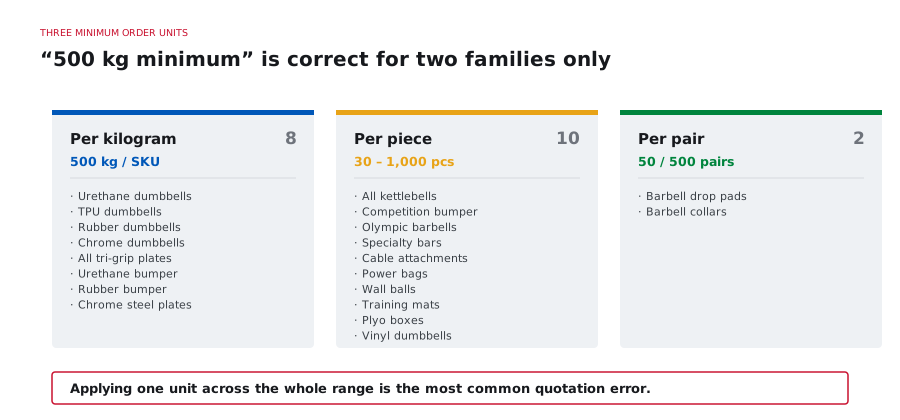
And for reference, a custom Pantone colour raises the minimum order because it requires a dedicated batch, as set out in the article on MOQ.
The underlying point
Colour disputes are rarely about colour. They are about a specification that was never written down, then recalled differently by two people months apart.
A physical swatch, approved in writing and retained by both parties, removes the ambiguity entirely.
Written with our technical manager, who has spent twenty years on the floor of a free-weight plant. Figures that would require independent laboratory testing are deliberately not quoted here.
Frequently asked
How is colour applied to coated dumbbells and plates?
Pigment is mixed into the material before forming, so the colour runs through the whole section rather than sitting on the surface. It cannot be adjusted after the batch is mixed and cured.
Why can't I approve a colour from a photograph or screen?
Monitors differ, and a screen emits light while a coated product reflects it. The same pigment also looks different in urethane, TPU and vinyl because the base materials vary in translucency and finish.
What should I send to specify a brand colour?
A Pantone code, ideally from a physical book, plus any existing physical sample, the material it applies to, and where on the product the colour is used. A physical sample beats a code.
Will colour vary between batches?
Some variation is inherent, since raw material lots and cure conditions differ. It is controlled by mixing to a fixed formula and comparing each batch against a retained approved sample under consistent lighting.
Does a custom colour affect the minimum order quantity?
Yes. A custom Pantone requires a dedicated mixing batch, which raises the minimum compared with a standard stock colour.

Written by the people who quote, tool and inspect the product at our own plant. Questions: [email protected]
Request a quotation
Send the list. Get price, lead time and container loading in one working day.
Item list, quantities and destination port are enough to start. Logo artwork and colour references can follow once the price is agreed.
- Email[email protected]
- Phone / WhatsApp / WeChat+86 138 6042 3022
- OfficeIronhue Limited
Room 1203, No.5 Jinzhong Road, Huli District, Xiamen, China