
Quick answer
Six standing rules in our plant, each written after a specific failure: a time limit between blasting and coating (rust on the core broke the bond); mandatory airing after vulcanisation (a rushed batch arrived with severe odour); no gambling on colour (a pigment lot varied and the customer noticed); destination-specific storage advice before shipping (chrome corroded in a humid warehouse); check our own records before blaming the customer (a handle coating really was too thin); and sales must confirm lead times with production. None of these were written in advance.
A quality system described in the abstract tells a buyer very little. What tells them something is the specific incident behind each rule.
These are six that exist in our plant, and why.
1. A time limit between blasting and coating
A batch of rubber dumbbells reached a customer with the coating separating from the iron core. Video arrived showing a head that moved when twisted by hand.
It took three months to find. The problem was not the rubber and not the vulcanisation. The cores had been shot blasted and then left too long before coating. The surface had begun to rust again, and the adhesive did not bond to it properly.
Rule: a maximum interval between blasting and coating. Exceed it and the part is re-blasted. Operators record the time.
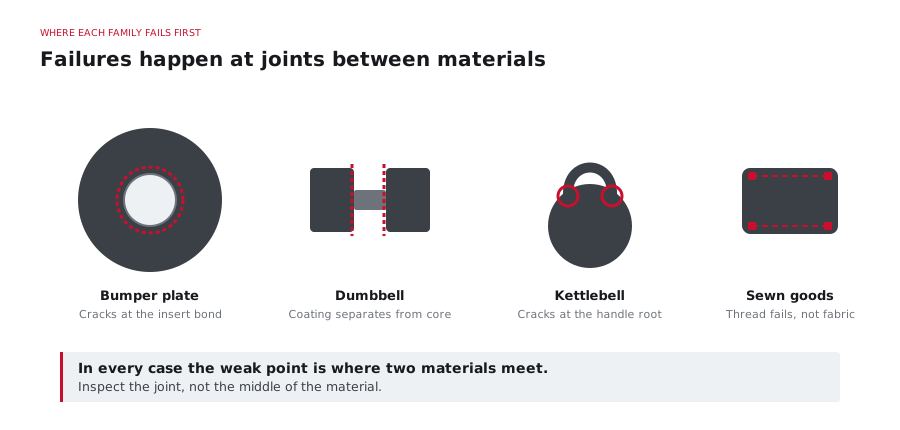
What it changed beyond the rule: when a coating problem appears now, the first thing examined is not the coating. It is the interface between the coating and the substrate. Eight times out of ten that is where it is — consistent with how free weights fail generally, which is at joints between materials rather than within them.
2. Mandatory airing after vulcanisation
A customer was pressing hard on delivery. The batch was vulcanised, packed quickly, and shipped.
It arrived smelling badly enough that the gym could not put it on the floor. The goods sat in a warehouse for weeks while the odour dissipated.
Rule: finished rubber goods stand for a set period before packing. This is not negotiable, including when a customer is waiting.
Skipping it saves a few days and costs the customer's confidence. That is a bad trade every time.
The mechanism behind it is covered in why rubber smells: volatiles continue leaving the product after cure, and inside a sealed container they simply accumulate.
3. No gambling on colour
A custom Pantone order. The sample was approved, but during production a pigment lot varied slightly.
Under the standard light source it looked acceptable. I was not comfortable with it, but we let it go. The customer noticed. They did not make a scene, but they remembered.
Rule: if there is doubt about colour, re-sample and re-confirm. Do not ship and hope.
The reasoning: the probability that a customer will not notice is lower than it feels at the time. The full colour process is described in Pantone matching in production.
4. Storage advice before shipping, by destination
A batch of chrome-plated goods passed inspection and left the plant in good condition. At the customer's end they were stacked directly on a warehouse floor in a humid region. Corrosion appeared quickly.
The investigation cleared the plating. But the conclusion was not that the customer was at fault:
We knew that region was humid. We should have told them how to store it. We did not. The customer does not know these things — it is our job to say so.
Rule: before shipping, send storage guidance appropriate to the destination and season, particularly for plated goods and sewn products. Detail in choosing free weights for humid climates.
5. Check our own records before blaming the customer
A complaint arrived about a kettlebell handle cracking at the root. The fracture pattern looked like impact damage, and the initial assumption was misuse.
The production records said otherwise. On that batch the coating at the handle root really was thinner than specification. Under normal use, the load concentrated exactly there.
Rule: investigate our own records before assuming customer fault.
Check first. Then talk.
This sits behind the framework in who is responsible when equipment breaks — the framework exists because the instinct it corrects was once ours.
6. Sales confirms lead times with production
The simplest rule and the one that prevents the most trouble. Before any delivery date is given to a customer, three questions:
- How tight is the schedule for this product right now?
- Is the material in stock?
- Does this involve new or modified tooling?
What I do not want is a salesperson promising a date without asking. The promise gets made, it cannot be met, and everyone is holding it.
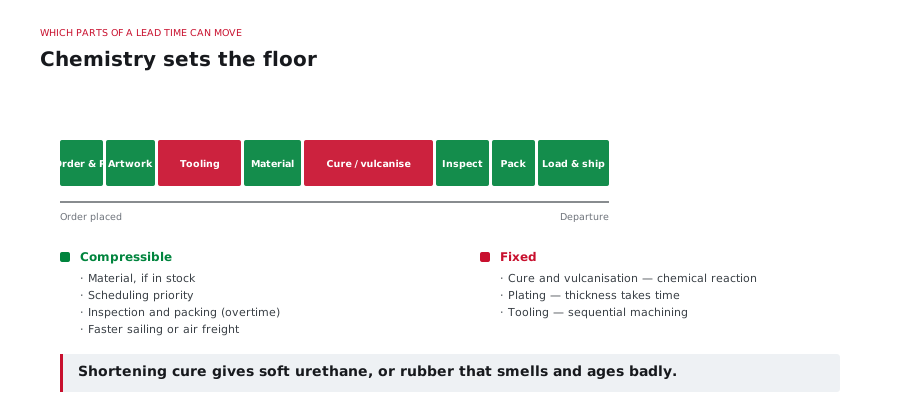
Which parts of a lead time can and cannot move is set out in this article.
Why publish any of this
A buyer cannot verify a quality system from a certificate. What they can do is ask a supplier to describe a failure and what changed afterwards.
A supplier who has no answer either has not been operating long, or is not going to tell you. Neither is reassuring.
| Question worth asking any supplier | What a real answer sounds like |
|---|---|
| Tell me about a batch that went wrong | A specific incident with a root cause |
| What changed afterwards? | A written rule, and who records it |
| Has it recurred? | A direct yes or no |
Every rule listed here was written after money was lost. That is generally how rules get written, and a plant with no such rules has either been lucky or has not been paying attention.
Written with our technical manager, who has spent twenty years on the floor of a free-weight plant. Customer details are withheld; the incidents are not.
Frequently asked
Why would a supplier publish its own manufacturing failures?
Because a quality system cannot be verified from a certificate. Describing a specific failure, its root cause and the rule written afterwards gives a buyer something checkable, which a general quality claim does not.
What caused coating to separate from dumbbell cores?
The iron cores were shot blasted and then left too long before coating. The surface began to rust again and the adhesive did not bond properly. The rule now sets a maximum interval between blasting and coating, recorded by the operator.
Why must rubber goods be aired before packing?
Volatiles continue to leave the product after vulcanisation. Packed immediately, they accumulate inside a sealed container over the voyage, and the odour arrives all at once when it is opened.
Should a supplier investigate before responding to a complaint?
Yes. In one case a handle fracture looked like impact damage but production records showed the coating at the handle root was below specification. Assuming customer fault first would have been wrong and would have cost the account.
What should sales confirm before quoting a delivery date?
How tight the schedule is for that product, whether material is in stock, and whether new or modified tooling is involved. A date given without those three answers is a guess.

Written by the people who quote, tool and inspect the product at our own plant. Questions: [email protected]
Request a quotation
Send the list. Get price, lead time and container loading in one working day.
Item list, quantities and destination port are enough to start. Logo artwork and colour references can follow once the price is agreed.
- Email[email protected]
- Phone / WhatsApp / WeChat+86 138 6042 3022
- OfficeIronhue Limited
Room 1203, No.5 Jinzhong Road, Huli District, Xiamen, China