
Quick answer
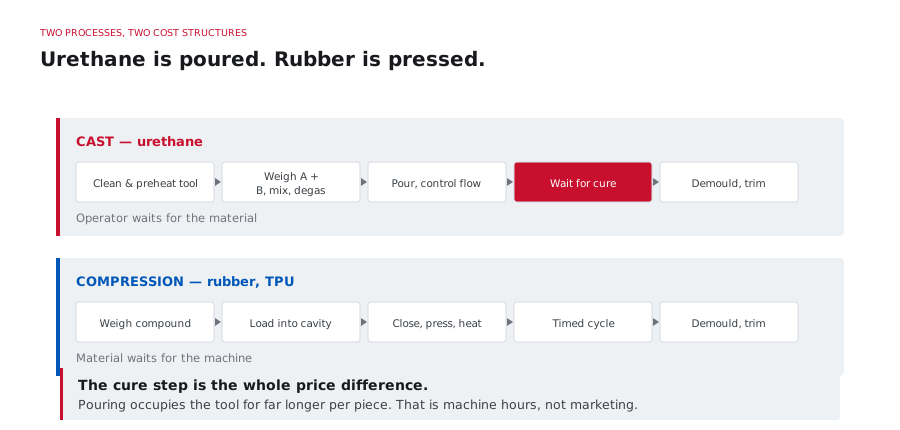
Urethane is cast: liquid material is poured over a machined steel core and cured, which takes several times longer per piece than pressing. Rubber and TPU are compression moulded under heat and pressure, which is much faster. That cycle time is the main reason urethane sits at the top of the price range. What the extra cost buys is no odour, no floor marking, colour that runs through the material, and the ability to mould a logo below the surface. Rubber cannot do the last two.
Two 20 kg dumbbells, same steel core, same weight, visibly similar. One costs meaningfully more. The difference is not the brand on the end cap — it is the process that put the coating on.
The two processes
| Cast (urethane) | Compression moulded (rubber, TPU) | |
|---|---|---|
| How | Liquid material poured into the tool around the core, then cured | Solid compound pressed into the tool under heat and pressure |
| Cycle time per piece | Several times longer | Short |
| Tooling cost | Higher | Moderate |
| Colour | Pigment in the material, runs all the way through | Full colour for TPU; rubber is black with coloured inserts |
| Logo | Moulded below the surface | Moulded for TPU; printed or insert for rubber |
| Relative cost | Highest | Lower |
One sentence to remember: urethane is poured, rubber is pressed. Pouring is slower, so it costs more.
When a buyer pushes on price, this is the explanation to give. It does not defend the price, it explains it — and it lets the conversation move on to which tier actually fits their market.
What the extra cost buys
No odour
Vulcanised rubber has a smell. It fades over several weeks in a ventilated room, and it is worse in a sealed container in summer and worse again on recycled compound. In an air-conditioned boutique studio it is a complaint; in a large warehouse-style gym it is usually a non-issue.
No floor marking
Rubber can leave marks on pale floors, particularly where equipment is dragged rather than lifted. Urethane and TPU do not. This is why 24/7 chains with light-coloured flooring specify the upper tiers even when the budget is tight.
Colour that survives
In a cast urethane piece the pigment is in the material before it is poured, so the colour runs through the whole section. Scuffs reveal more of the same colour rather than a different substrate underneath. It also means the colour has to be right before the batch runs — there is no touching it up afterwards.
A logo that outlives the season
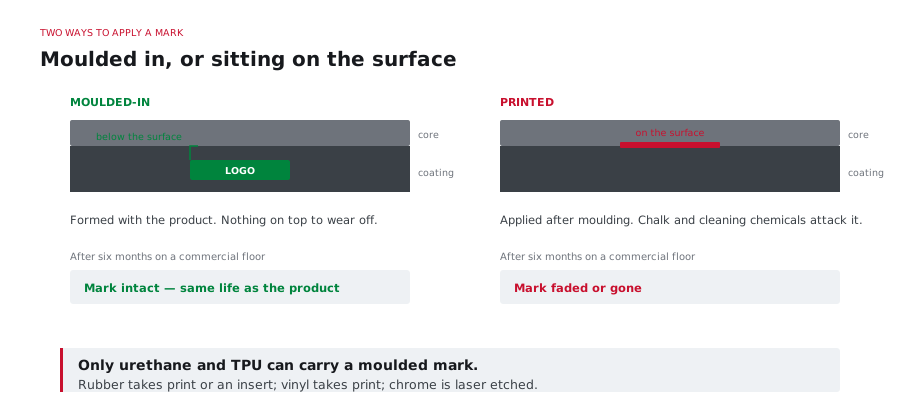
Only urethane and TPU can carry a moulded-in logo. The mark is formed with the product, below the surface, so there is nothing on top to wear away. Printed marks on a commercial floor rarely survive a season of cleaning chemicals and stacking.
Choosing by end market, not by budget
The mistake is to ask which coating the buyer wants. Most buyers are not sure. Ask what kind of facility the goods end up in and recommend from there.
| End market | Sensible tier |
|---|---|
| 24/7 chains, premium commercial, pale flooring | Urethane |
| Commercial on a tighter fit-out budget | TPU |
| Standard commercial, PT studios, boxes | Rubber |
| Home fitness, retail, e-commerce | Vinyl or neoprene |
| Boutique studios, hotels, residential | Chrome |
The steel underneath is the same across all of them. The coating decides the price band, and the price band decides which customer the product is for.
A note on mixing tiers
Nothing prevents a single order from covering more than one tier. A distributor opening a territory often takes rubber as the volume line and adds a smaller quantity of urethane for the accounts that ask for it. Because all five coatings run in the same plant, they ship in one container on one bill of lading with one inspection.
Related reading: why handle diameter steps up with weight.
Frequently asked
Why is urethane more expensive than rubber?
Because of cycle time. Urethane is cast, meaning liquid material is poured into the tool and cured, which takes several times longer per piece than pressing a rubber compound under heat and pressure. The extra cost is machine hours, not branding.
Does rubber equipment really smell?
Yes, from vulcanisation. It fades over several weeks in a ventilated space, and is stronger in a sealed container in summer and on recycled compound. It matters in air-conditioned boutique studios and rarely matters in large warehouse-style gyms.
Can a logo be moulded into rubber dumbbells?
Not below the surface. Rubber takes a printed mark or a moulded insert. Only urethane and TPU allow the logo to be formed inside the material during moulding, where there is nothing on top to wear off.
Which coating should a distributor stock first?
Usually rubber as the volume line, because it suits standard commercial floors at the lowest cost. Add urethane or TPU for accounts with pale flooring, air-conditioned spaces or private-label requirements.
Can one order include several coatings?
Yes. All five coatings run in the same plant, so a mixed container ships on one bill of lading with a single inspection.

Written by the people who quote, tool and inspect the product at our own plant. Questions: [email protected]
Request a quotation
Send the list. Get price, lead time and container loading in one working day.
Item list, quantities and destination port are enough to start. Logo artwork and colour references can follow once the price is agreed.
- Email[email protected]
- Phone / WhatsApp / WeChat+86 138 6042 3022
- OfficeIronhue Limited
Room 1203, No.5 Jinzhong Road, Huli District, Xiamen, China