
Quick answer
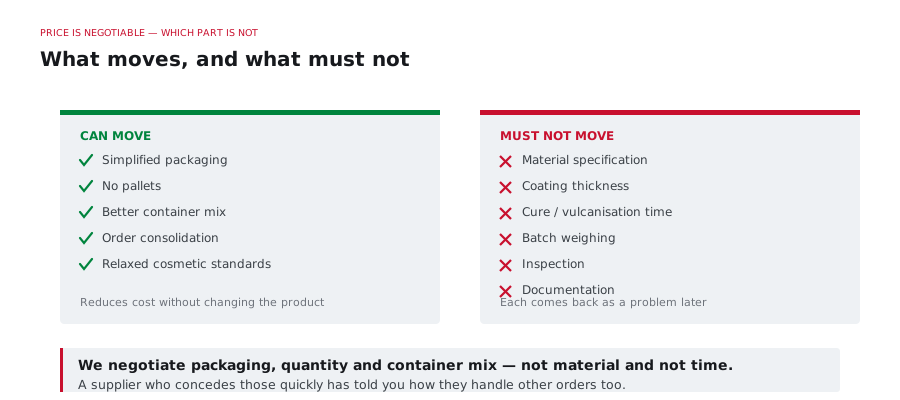
Negotiable: packaging specification, pallets, container mix, consolidating orders to reduce changeovers, and cosmetic standards on surfaces nobody sees. Not negotiable: the material itself, coating thickness, cure and vulcanisation time, batch weighing, and inspection. A quotation that looks impossible has usually moved something from the second list — most often nominal weight, coating thickness, or the amount of recycled content in the compound.
Every order involves some negotiation. The useful distinction is not how much a supplier will move, but what they move.
What can move
| Lever | How it saves | Trade-off |
|---|---|---|
| Simplified packaging | Plain cartons instead of retail boxes | Not suitable for shelf sale |
| No pallets | Lower material and cube cost | Buyer must handle loose unloading |
| Better container mix | Light goods fill space the heavy cargo leaves | None — this is simply better planning |
| Order consolidation | Fewer changeovers and material preparations | Larger single commitment |
| Relaxed cosmetic standards | On faces that are never visible in use | None, if correctly specified |
The third row deserves emphasis because it is the one buyers most often overlook. Free weights are limited by payload rather than volume, so adding light, bulky items to a heavy order costs almost nothing in freight per unit. That is a genuine saving requiring no compromise.
What cannot move
- Material. Urethane cannot become rubber and still be sold as urethane.
- Coating thickness. Thinner coating wears through sooner — and the coating-to-core bond is where these products fail.
- Cure and vulcanisation time. Chemical reactions. Shortened, urethane stays soft and rubber ages badly and smells.
- Batch weighing. Drop it and weight is no longer controlled.
- Inspection. Skipped, the defects reach the customer instead of the scrap bin.
- Documentation. Certification that is not held cannot be promised.
Price is negotiable, but what we negotiate is packaging, quantity and container mix — not material and not time. Concede those and everything afterwards is trouble.
How an impossible price is usually achieved
When a competing quotation is far below what the material and process should allow, the saving has come from somewhere specific. The common methods:
Nominal weight below actual
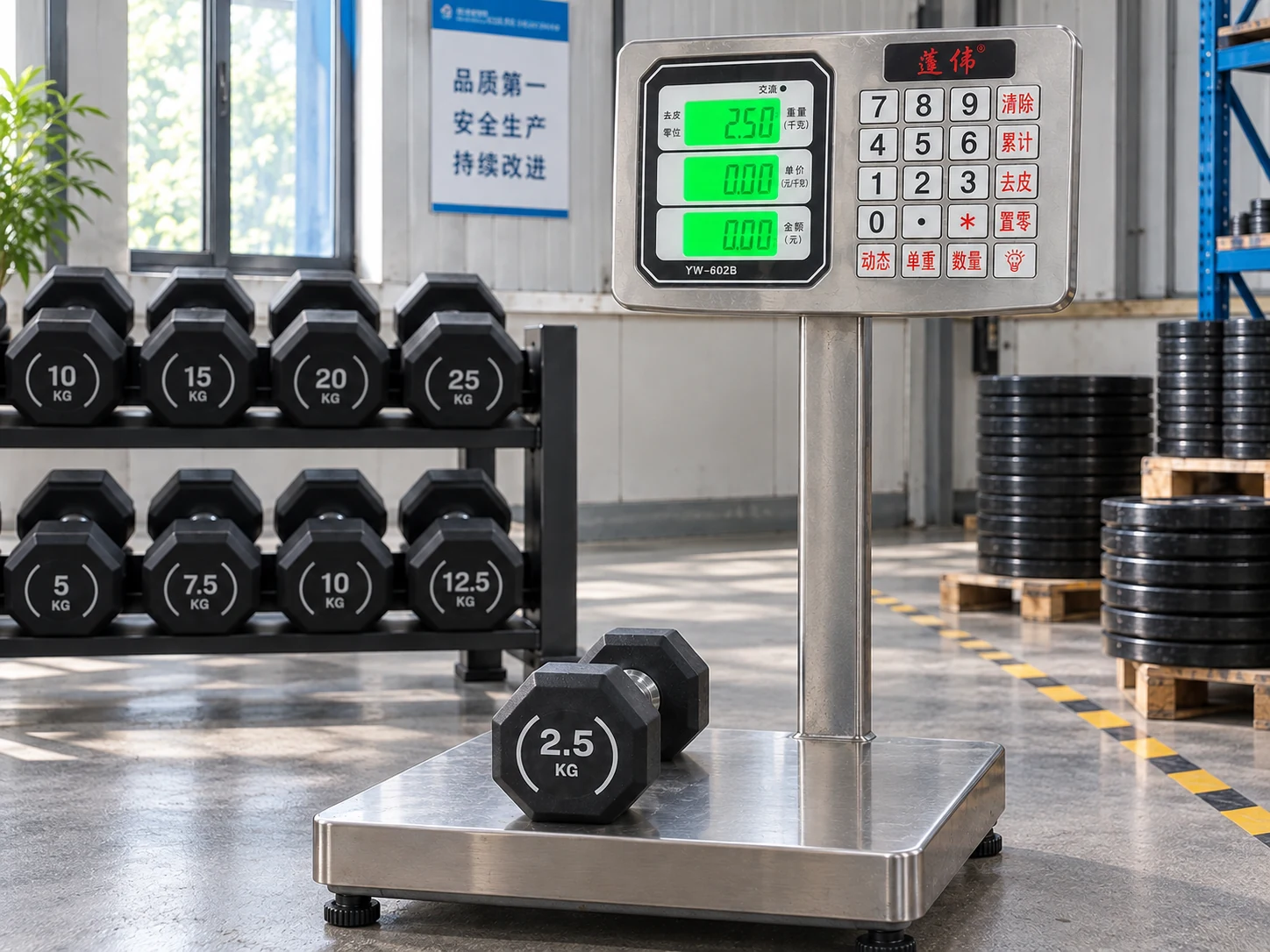
A plate marked 20 kg that weighs noticeably less. Straightforward to detect and rarely checked, which is why it persists. Weighing a sample on arrival takes minutes — see weight tolerance.
Thinner coating
Less material per piece, and the product looks slightly smaller than an equivalent from another supplier. Service life drops considerably, but not until the goods are long since paid for.
Recycled or heavily filled compound
Cheaper rubber, and the tell is odour. A strong smell on arrival is frequently a compound signal rather than a handling one.
Sampling instead of batch inspection
Cheaper to run and invisible in the finished goods, until an out-of-tolerance piece reaches an end customer.
Shortened process time
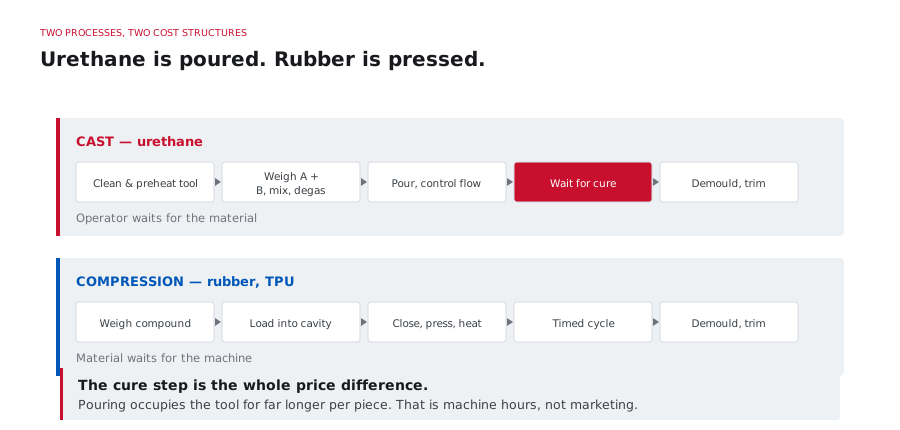
Cure and vulcanisation are time, and time is capacity. Cutting them raises throughput and degrades the product in ways that appear months later.
How to check a suspiciously low quotation
- Weigh a sample. Against nominal, and pieces against each other.
- Compare dimensions with an equivalent from another supplier. Thinner coating shows up as a smaller piece.
- Smell it. Crude, and informative on rubber.
- Ask whether inspection is by batch or by sample, and what the sampling rate is.
- Ask what the cure time is. A supplier who cannot answer is not the one making it.
Why we will not give a single cost breakdown
Buyers sometimes ask what proportion of cost is material, labour and overhead. The honest answer is that it varies by line:
- Urethane — labour and tooling amortisation weigh heavily, because casting is slow
- Rubber — material and energy dominate
- Chrome — the plating line and its environmental controls dominate
I will not give one set of percentages, because whichever one I gave would mislead you about the others. Tell me the line and I will break that one down.
The practical position
When asked to reduce a price, the productive question is not whether it can be done but which lever. Packaging, pallets, mix and consolidation are all available. Material and time are not, and a supplier who concedes them quickly has told you something about how they handle everyone else's orders too.
Written with our technical manager, who has spent twenty years on the floor of a free-weight plant. Customer details are withheld; the incidents are not.
Frequently asked
What can be negotiated on a free-weight order?
Packaging specification, whether pallets are used, container mix, consolidating orders to reduce changeovers, and cosmetic standards on surfaces not visible in use. These reduce cost without affecting the product.
What should never be reduced to lower a price?
Material specification, coating thickness, cure and vulcanisation time, batch weighing and inspection. Each of these degrades the product in ways that appear after the goods are paid for.
How do some suppliers quote impossibly low prices?
Usually by reducing nominal weight below actual, thinning the coating, using recycled or heavily filled compound, sampling instead of batch inspection, or shortening cure time.
How can I check whether a cheap quotation is realistic?
Weigh a sample against nominal and against other pieces, compare dimensions with an equivalent product, note any strong odour on rubber, and ask whether inspection is by batch or sample and what the cure time is.
Why won't you give a percentage cost breakdown?
Because it differs by line. Urethane is dominated by labour and tooling, rubber by material and energy, chrome by the plating line. A single set of percentages would misrepresent the others.

Written by the people who quote, tool and inspect the product at our own plant. Questions: [email protected]
Request a quotation
Send the list. Get price, lead time and container loading in one working day.
Item list, quantities and destination port are enough to start. Logo artwork and colour references can follow once the price is agreed.
- Email[email protected]
- Phone / WhatsApp / WeChat+86 138 6042 3022
- OfficeIronhue Limited
Room 1203, No.5 Jinzhong Road, Huli District, Xiamen, China